Solar storage explained

Solar battery storage: keeping your own generation for later

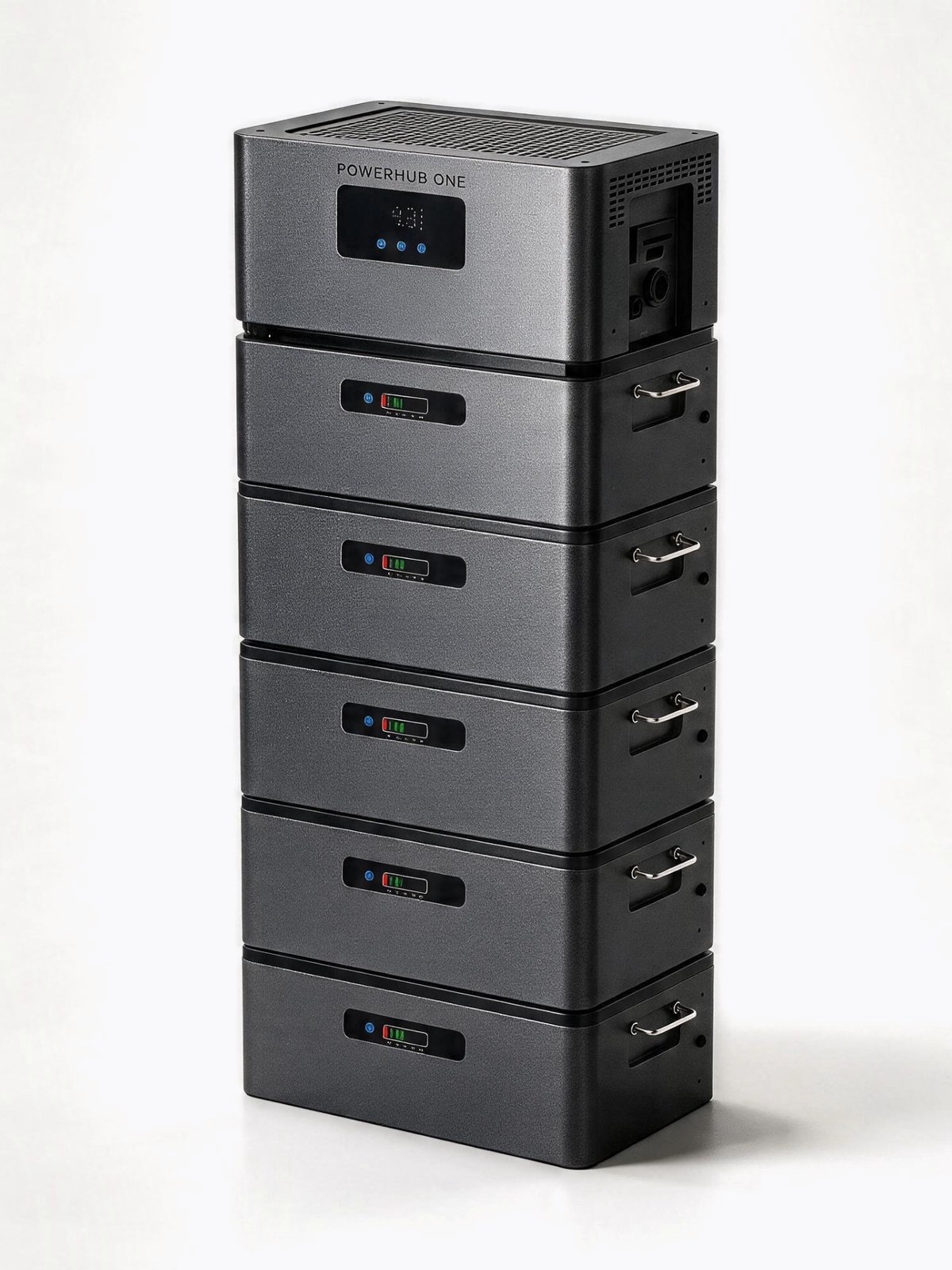
Solar battery storage holds surplus generation until the household needs it. PowerHub ONE is an AC-coupled, modular system across 2.4 to 12.0 kWh, with published prices from €1,199 to €3,499.

How does solar battery storage work?

The battery charges from generation the home does not use at that moment and discharges later. Because PowerHub ONE works on the AC side, the existing solar inverter stays in place and no panels connect to the battery directly.

Modular range

Five configurations, one platform

Capacity and prices come from the central product record.

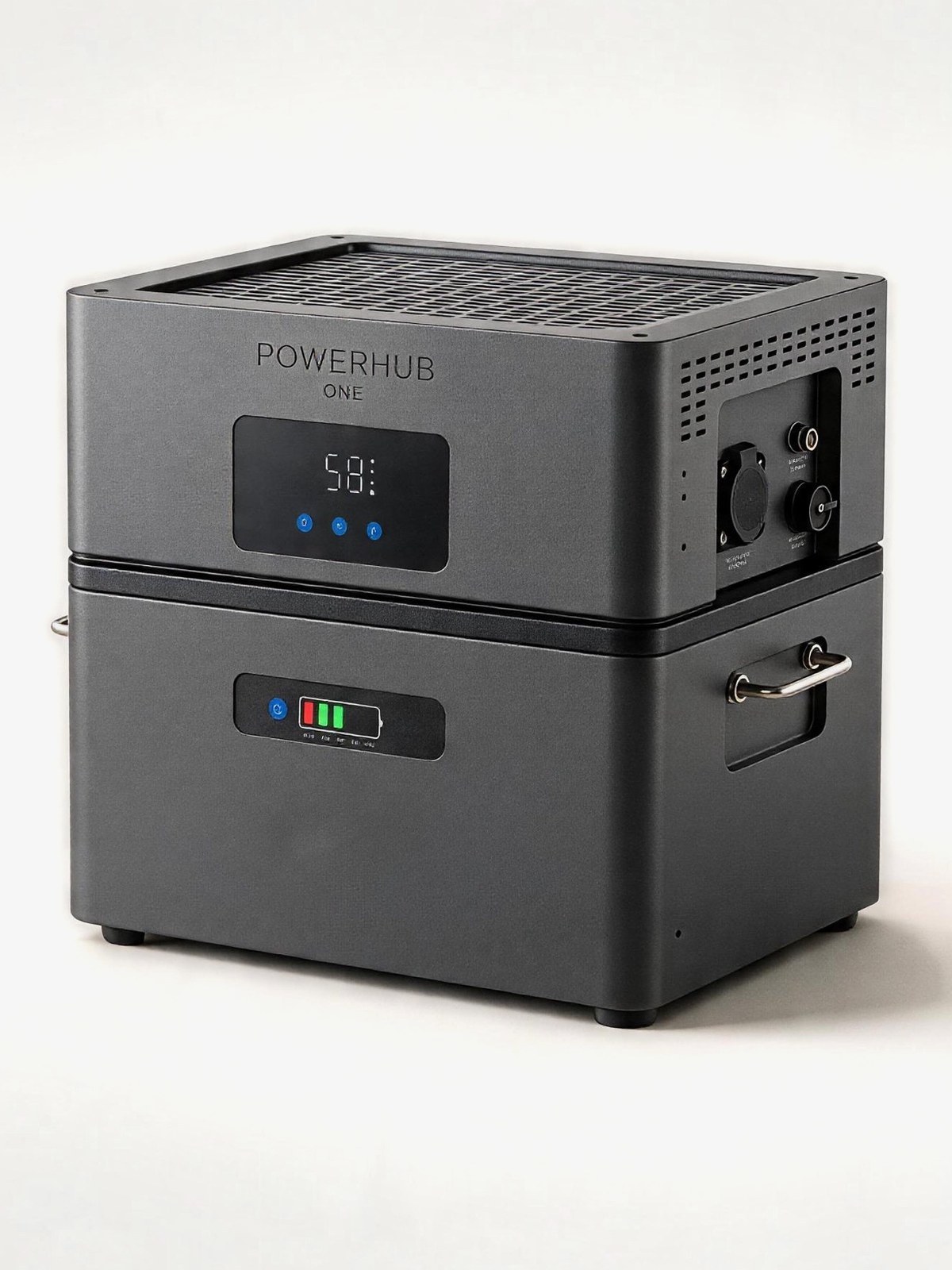
PowerHub ONE 2.5

PowerHub ONE 2.5

2.4 kWh

€1,199

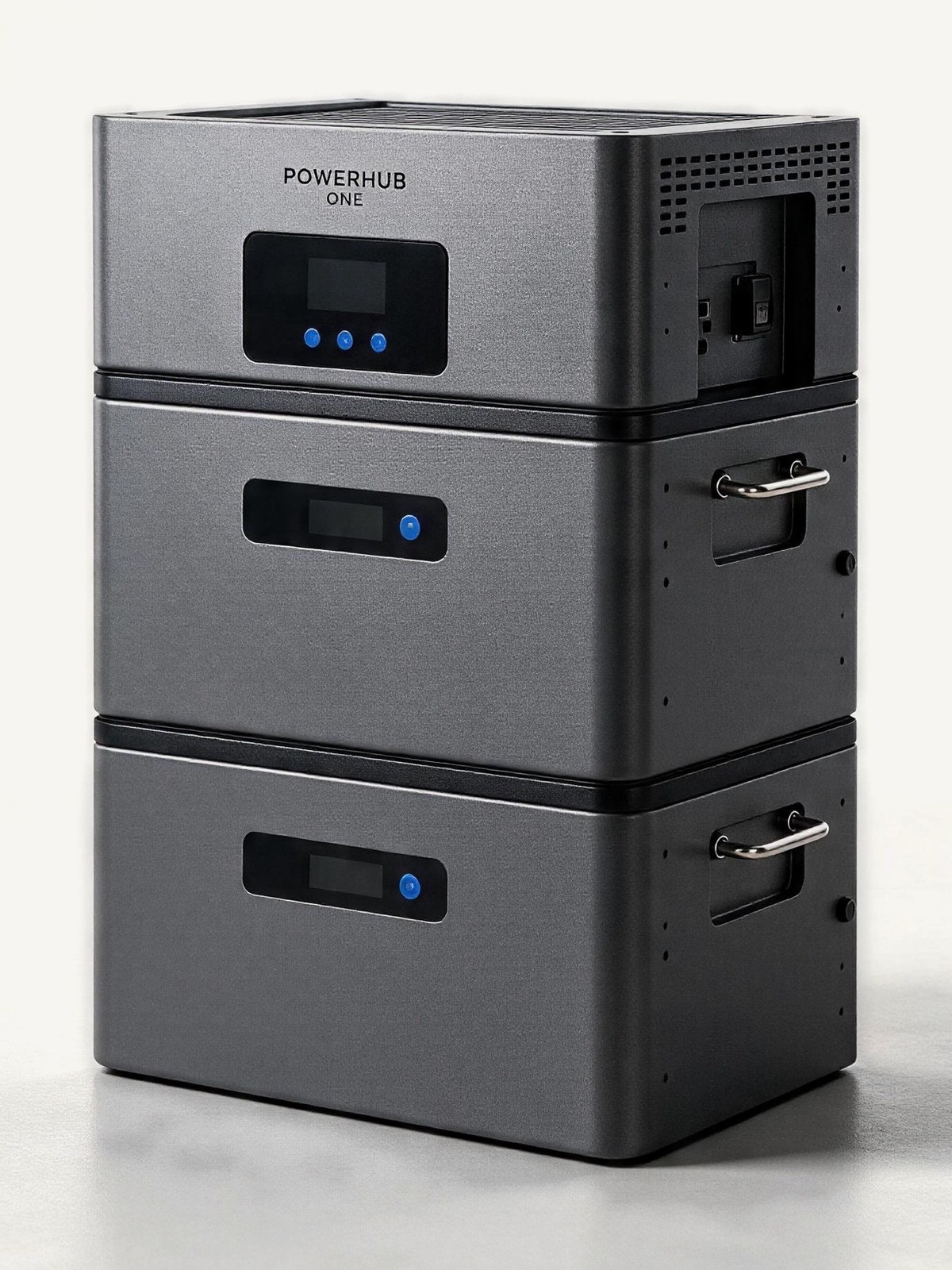
PowerHub ONE 5

PowerHub ONE 5

4.8 kWh

€1,849

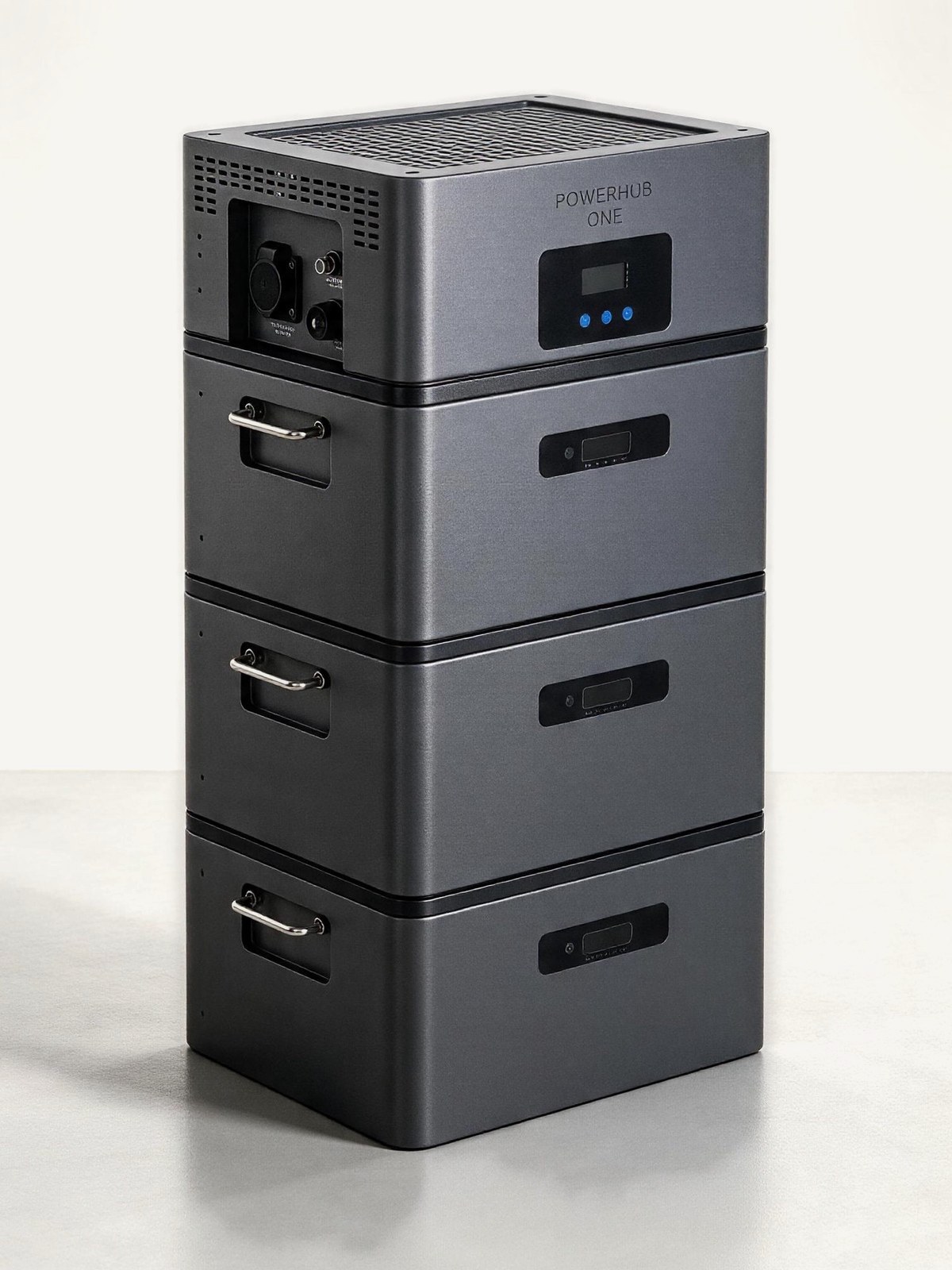
PowerHub ONE 7.5

PowerHub ONE 7.5

7.2 kWh

€2,499

PowerHub ONE 10

PowerHub ONE 10

9.6 kWh

€2,999

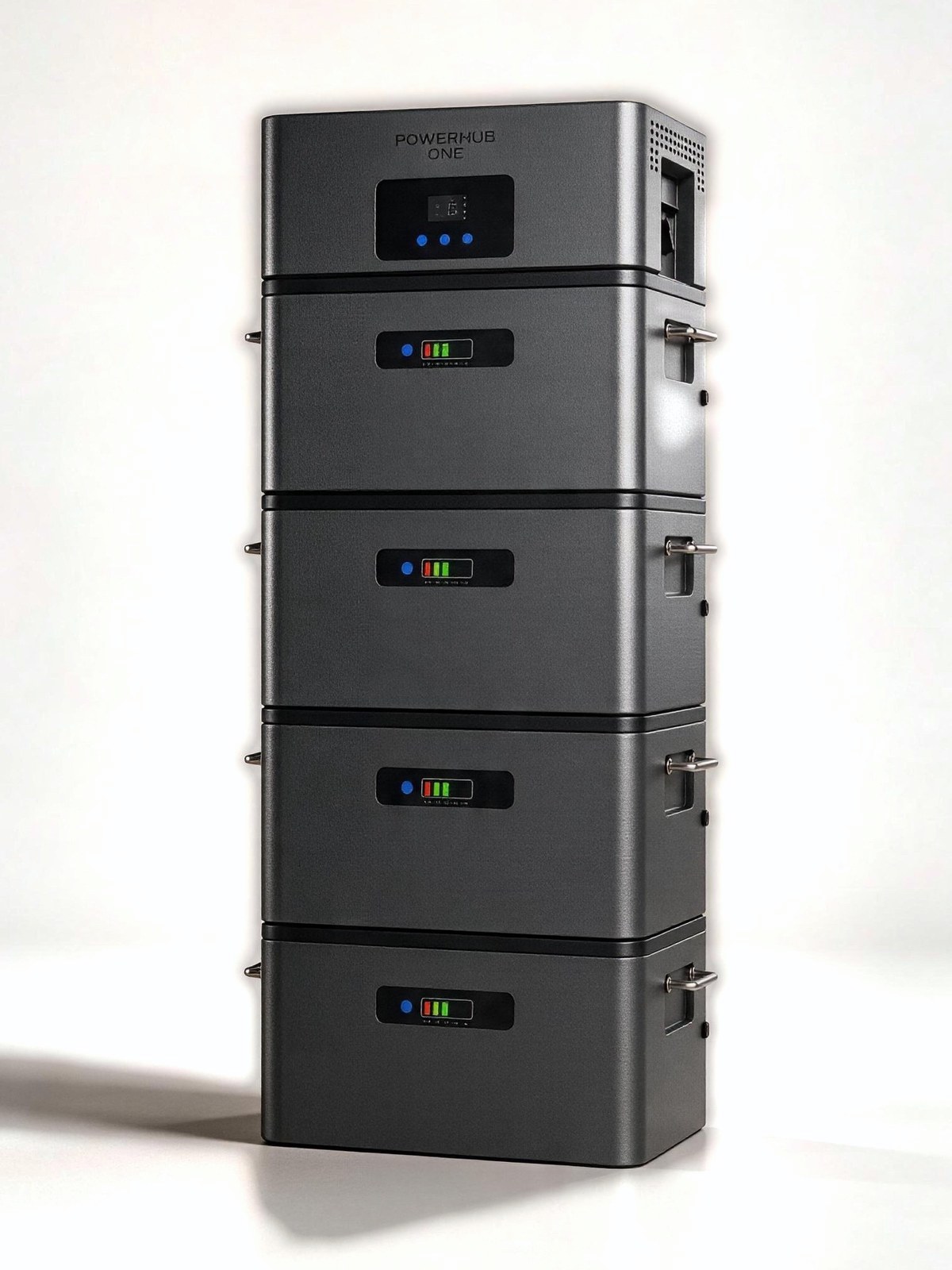
PowerHub ONE 12

PowerHub ONE 12

12.0 kWh

€3,499

Storable surplus sets the size

A battery can never store more than the generation that is genuinely left over. Look at hourly export figures across several months before choosing capacity.

AC coupling keeps your inverter

The battery is added alongside the existing solar installation rather than replacing the inverter, so the solar side stays untouched.

Prices and capacity

Five configurations run from €1,199 to €3,499 over 2.4 to 12.0 kWh of real capacity, in 2.4 kWh modules.

Power depends on the connection

Standard mode delivers up to 800 W on a suitable 230 V socket. A dedicated circuit allows up to 2.4 kW peak and requires the corresponding electrical work.

In depth

What to know before you decide

Solar battery storage: sizing from export data

Solar battery storage is only as useful as the surplus it can absorb. Hourly export figures over several months show the energy that was genuinely available, and that number - not the kWp on the roof - decides which configuration makes sense.

PowerHub ONE builds capacity from 2.4 kWh modules across 2.4 to 12.0 kWh of real capacity, so solar battery storage can start at the size your export data supports and grow if a heat pump or electric car changes the pattern.

Adding solar battery storage without touching the panels

Because the platform is AC-coupled, solar battery storage is added on the household side and the existing solar inverter keeps working. Standard mode operates up to 800 W on a suitable 230 V outlet; the documented setup on a dedicated circuit reaches up to 2.4 kW peak with fixed electrical work by a qualified electrician.

Metering differs by country and meter cabinet, so how household import, export and demand are measured is confirmed for the property rather than assumed from a brochure.

Next step

Explore PowerHub ONE, the modular home battery

Five configurations, prices and the published warranty framework on one page.

Customer reviews

What customers say about PowerHub ONE

We only publish reviews from customers who actually bought and used the product. As long as there are no reviews, no score is shown here — we never invent one.

No reviews yet

Once customers have their PowerHub ONE in use, we invite them to share their experience and the average appears here.

Already using a PowerHub ONE?

Customers receive a personal invitation after delivery. Every review is published unchanged, including critical ones.

Frequently asked questions

Answers for an evidence-based decision

No. The system is added on the AC side, so an existing solar installation can stay as it is.

Compare hourly surplus with evening and overnight consumption. Modules of 2.4 kWh let you start smaller and extend later.

The published warranty covers 10 years, 6,000 cycles and at least 70% remaining capacity under the published warranty conditions. Check the full conditions for scope and exclusions.